
Transitioning from the military to civilian life is smoother when the next mission is clear, hands-on, and career-ready. That’s exactly what GI Bill approved HVAC programs deliver: a direct route into a trade where precision, problem-solving, and teamwork matter. Heating, ventilation, and air conditioning technicians keep homes comfortable, data centers operational, and commercial spaces safe. With the right training, veterans can convert field discipline into technical mastery—working with heat pumps, refrigerant charging, airflow diagnostics, and smart controls while earning strong wages and steady work year-round.
How the GI Bill Works for HVAC Training, Apprenticeships, and Certifications
The GI Bill can fund more than traditional college. It also supports high-quality, non-college career and technical training—exactly the kind of instruction HVAC requires. Eligible veterans and service members can apply Post‑9/11 GI Bill benefits to approved diploma or certificate programs that teach core competencies like system design, air distribution, zoning, heat pump commissioning, furnace fundamentals, and safety. The simplest way to confirm whether a specific school or course is covered is to use the VA’s WEAMS Institution Search and to speak directly with the school’s School Certifying Official, who can explain program-level approval and help verify what’s covered before you enroll.
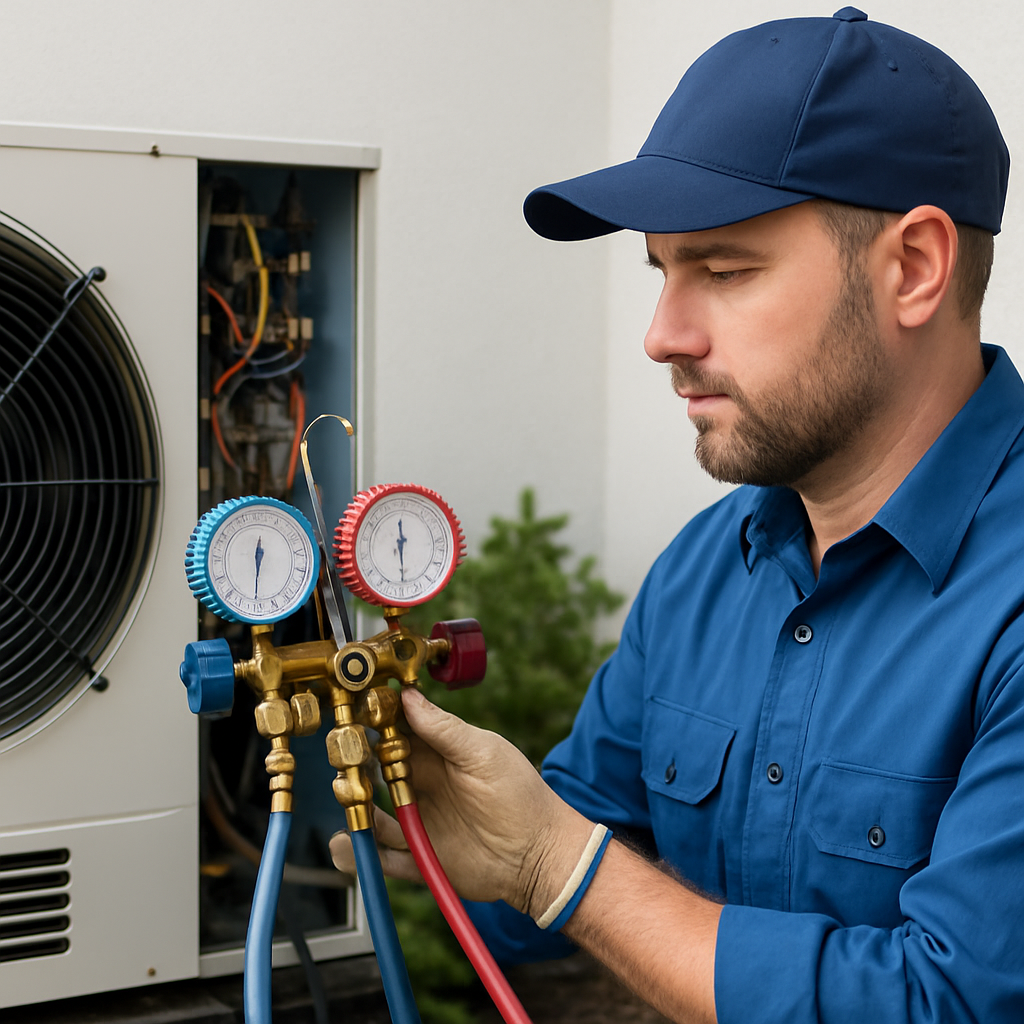
When attending an approved in-person program, the Post‑9/11 GI Bill can include tuition coverage, a monthly housing allowance, and a stipend for books and supplies. Many veterans appreciate that HVAC training is highly applied: you learn through labs that mirror jobsite conditions and through service procedures that build speed and accuracy. Programs emphasizing hands-on troubleshooting—like precise refrigerant charging, brazing, evacuation and recovery, digital manifold use, pressure/temperature relationships, electrical diagnostics, and airflow measurement—are ideal fits for benefits aimed at employability.
Beyond school, the GI Bill also supports On‑the‑Job Training (OJT) and apprenticeships at approved employers. This blend lets you earn a paycheck while the GI Bill provides a benefit that generally tapers as your employer-paid wages rise. For HVAC, that pathway might start as an installer helper or maintenance tech and advance toward service technician, lead installer, or controls specialist as competencies stack. Apprenticeship hours can reinforce what’s learned in class: load calculations, duct sizing, heat pump balance points, combustion analysis, and commissioning checklists become muscle memory when practiced daily.
Don’t overlook licensing and certification benefits. The GI Bill can reimburse fees for approved industry exams, such as EPA Section 608 certification—a must for anyone who handles refrigerants—and widely recognized credentials like NATE or HVAC Excellence, subject to VA guidelines. Talk with your program about recommended certification timing. Many schools schedule mock testing and exam prep after modules on heat pumps, electrical, and refrigeration cycles to raise first-time pass rates and speed your move into revenue-producing roles.
What to Look For in a High‑Value HVAC Program
Not all HVAC training is equal. Seek programs that align with how real jobsites operate—and that means heavy emphasis on live equipment, tight instructor-to-student ratios, and structured practice that moves from fundamentals to advanced diagnostics. A strong curriculum should cover core theory and lab time across refrigeration cycles, electrical and controls, airflow and duct design, zoning layouts, heat pump systems (including cold‑climate strategies), gas furnace operation, hydronics basics where applicable, and modern commissioning. Look for intentional training on digital tools—manifolds, micron gauges, data loggers, static pressure probes—and on documenting results for quality control.
Quality installation is the backbone of system performance, so standout programs train to it. That includes proper line set practices, evacuation down to target microns, nitrogen sweeps, correct charge based on subcooling/superheat, leak detection, and meticulous airflow setup: measuring total external static pressure, setting blower speeds, verifying CFM, sealing ducts, and adjusting dampers. Strong courses also teach load calculations and duct sizing principles so techs can recognize mismatches that sabotage comfort and efficiency. Ask about capstone projects where teams must commission a system and defend their readings—this builds the communication and documentation habits employers value.
Instructor experience matters. Instructors who have led installs, tuned heat pumps across seasons, balanced supply and return, and solved low‑voltage control issues bring the field’s nuance into the lab. They can coach you on faster, safer methods and on reading symptoms rather than just swapping parts. Equally important is how the school supports your career launch: resume prep, interview coaching, employer nights, and local partnerships that convert labs into job offers. Flexible schedules—day, evening, or modular intensive options—help you manage family or work while you train.
Finally, verify program outcomes. Ask about graduation rates, first‑time EPA 608 pass rates, and placement into entry‑level roles like residential installer, maintenance technician, or junior service technician. Explore curricula from top trainers and compare GI Bill approved HVAC programs to find a skills-first path that builds confidence quickly. The best fit will feel practical: more meters and manifolds than lectures, more commissioning sheets than quizzes, and an emphasis on safe, repeatable processes you can carry to any jobsite.
Real‑World Pathways: From Classroom to Jobsite
Veterans thrive in HVAC because the trade rewards the same traits that drive mission success: thorough prep, attention to detail, and accountability. A common pathway begins with a focused 6‑ to 12‑month HVAC fundamentals program that stacks theory and labs. Early modules target safety, tools, thermodynamics, and electrical, followed by refrigeration circuits, refrigerant charging, and air distribution. As you progress, you’ll tackle heat pump defrost strategies, combustion analysis, and zoning controls. Many students sit for EPA Section 608 mid‑program, then complete a capstone where they diagnose seeded faults and produce a complete commissioning report. With those wins, employers see that you’re job‑ready—not just class‑ready.
Another effective route pairs an introductory course with OJT. You might complete core labs over a few months, then start paid work as an installer while attending advanced evening modules in system design, airflow math, or hydronics. This model turns every working day into a lab extension. You’ll set condensers, run line sets, pressure test, pull vacuums to target microns, and dial in charges—all with oversight that reinforces what you learned in the classroom. As your skills grow, you’ll handle maintenance visits, read static pressures, correct airflow, and graduate to service calls. Within a year, many techs can confidently commission residential heat pumps, troubleshoot low‑voltage controls, and communicate findings to homeowners or project managers.
For those with prior mechanical or electrical experience, advanced modules speed upskilling. If you’ve managed complex systems in the military—generators, environmental controls, or avionics—target high-impact topics: variable‑speed equipment, inverter-driven compressors, communicating thermostats, and airflow diagnostics. Classes that emphasize commissioning and documentation align with your background in checklists and standards. You’ll appreciate structured processes like verifying total external static pressure before blaming refrigerant charge, or proving load mismatch before swapping equipment. These habits separate “parts changers” from true technicians and build long-term credibility with customers and employers.
Enrollment is straightforward when you plan ahead. Gather your DD‑214 and transcripts, contact the school’s certifying official, and submit your benefits application on VA.gov. Request credit for prior learning where applicable, especially for electrical safety or mechanical systems. Set a realistic training calendar, then map certification milestones: EPA 608 first, followed by a core service credential once you’ve logged real cases. Spend extra time on airflow—poor airflow undermines performance more often than refrigerant issues—so you can solve the problems that most techs miss. With a methodical approach, graduates move quickly into steady roles, then into specialties like light commercial, controls, or system design leadership, where precision and quality installation drive measurable results.

Gothenburg marine engineer sailing the South Pacific on a hydrogen yacht. Jonas blogs on wave-energy converters, Polynesian navigation, and minimalist coding workflows. He brews seaweed stout for crew morale and maps coral health with DIY drones.