
Every deployment to mainnet carries irreversible consequences. A small oversight in Solidity can cascade into a multimillion-dollar exploit, drain treasuries, or permanently lock user funds. An AI smart contract audit reshapes how teams defend against these risks by pairing machine-scale analysis with human judgment, enabling continuous, early, and explainable security checks. For founders, protocol engineers, and security-minded product owners, adopting automated code review isn’t just a productivity boost—it’s an essential layer of assurance that supports safer launches and cleaner code across DeFi, NFTs, DAOs, and emerging Web3 use cases.
Why AI-Powered Auditing Matters for Solidity and Web3 Security
Smart contracts operate in an adversarial environment where incentives to exploit bugs are extreme and time-to-attack is measured in minutes. Traditional manual audits remain invaluable, but they can become bottlenecks during rapid iteration. An AI-powered auditing workflow offers complementary strength: it analyzes more paths, tests more assumptions, and catches recurring anti-patterns earlier in the development cycle. This is the heart of “shift-left” security—embedding checks at the point of code creation so that vulnerabilities are prevented rather than patched after costly delays.
What makes an AI smart contract audit so impactful is its breadth and repeatability. Automated engines can parse Solidity codebases line-by-line and across files, map the call graph, and highlight dangerous flows involving external calls, delegatecalls, and cross-contract messaging. They detect reentrancy hazards that could hit liquidity pools, arithmetic issues that jeopardize tokenomics, and access control mistakes that let attackers seize administrative functions. They also bring attention to business-logic risks unique to decentralized protocols, such as oracle manipulation, sandwiching opportunities, and misconfigured upgrades that undermine governance guarantees.
Speed is another decisive advantage. As teams iterate from proof-of-concept to testnet and mainnet, AI checks can run on every commit, surfacing actionable findings before reviews pile up or deadlines slip. The result is a tighter feedback loop: developers learn from structured, explainable findings, hygiene improves, and recurring vulnerabilities are extinguished from the codebase. This is especially useful in high-velocity contexts—token launches, yield strategies, cross-chain bridges—where fresh code meets dynamic market conditions. In practice, organizations using automated checks report improved consistency in secure coding standards, better documentation of security assumptions, and fewer late-stage surprises when they do engage external specialists for comprehensive reviews or final sign-offs.
How an AI Smart Contract Audit Actually Works
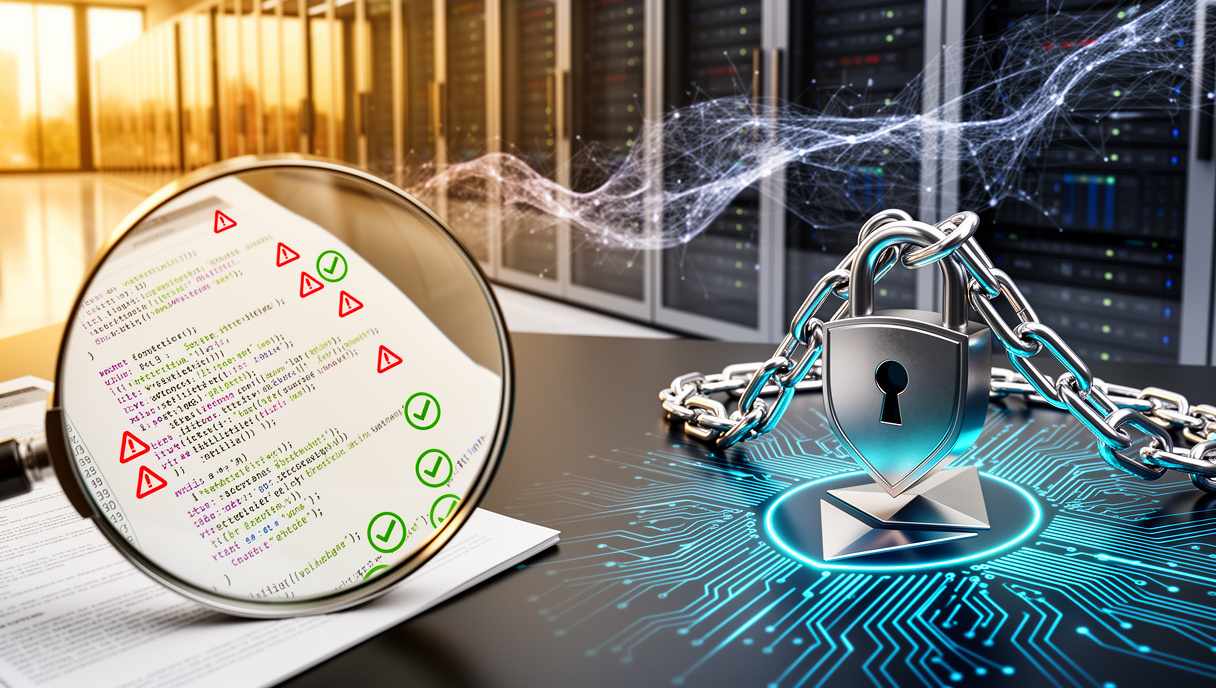
Under the hood, an automated audit combines multiple techniques to mimic and augment a seasoned auditor’s workflow. It begins with parsing the Solidity source into an abstract syntax tree (AST) and constructing data- and control-flow graphs. Static analysis identifies tainted inputs, unsafe external calls, and permission pathways. Symbolic execution explores program branches to uncover edge cases—like a withdrawal path that bypasses a balance check under a rare condition—while fuzzing injects pseudo-random and adversarial inputs to stress-test assumptions. Pattern-matching engines then compare code against a large corpus of known vulnerabilities and secure design templates, flagging deviations from best practices.
Modern systems layer on machine learning to rank severity and context. Instead of dumping an overwhelming list of warnings, they surface the most dangerous issues first and explain why the code is risky. For instance, a reentrancy finding won’t just point at a function with an external call; it will map the precise state writes that can be rolled back or manipulated, and suggest mitigations such as checks-effects-interactions, reentrancy guards, or pull-payment patterns. Similarly, for price-oracle logic, the audit may flag insufficient staleness checks, recommend circuit breakers, or highlight reliance on a single data source that’s vulnerable to manipulation.
Beyond vulnerabilities, AI audits often include gas optimization insights (e.g., storage packing, minimizing SSTORE operations, consolidating events), event and logging recommendations for forensics, and upgrade-safety checks for proxy-based architectures. Teams building governance or multi-sig modules gain clarity on role hierarchies, time locks, emergency pausing, and module isolation. Such breadth is crucial: the biggest exploits frequently arise not from a single bug but from multiple small assumptions that compound under real market incentives.
Pragmatically, integrating automated checks into CI/CD makes security a routine habit. On each pull request, the engine scans the delta, flags regressions, and ensures critical issues block merges. Findings become living documentation, improving onboarding and cross-team velocity. Tools like AI smart contract audit empower this approach with explainable results designed for developers, enabling quick remediation and safer iteration before formal audits or launch-day deadlines.
Best Practices: Combining AI, Manual Reviews, and DevOps for Audit-Ready Releases
An AI smart contract audit is most powerful when paired with well-run engineering processes. Start by treating specifications as first-class artifacts: define invariants, authorization boundaries, and failure modes. For a lending protocol, invariants might include collateralization properties, interest accrual boundaries, and liquidation preconditions. When AI engines know what “must always be true,” they can test those properties with greater precision, generating targeted counterexamples that teach the whole team where logic can break.
Adopt a layered testing strategy. Unit and integration tests validate happy paths; property-based testing and fuzzing probe unexpected state transitions; differential testing compares behavior across refactors or compiler versions. Plug static analyzers and gas reporters into your pipeline, and ensure that AI-generated findings are triaged like production bugs with severity labels, owners, and SLAs. Treat each high-severity issue as an opportunity to update internal standards—for instance, mandating OpenZeppelin libraries for ERC implementations, formalizing patterns for handling external calls, and documenting safe math and access control conventions.
Security is ultimately socio-technical. While AI scales detection, thoughtful human review remains essential for protocol incentives, governance assumptions, and novel architectural patterns. Schedule manual threat-modeling sessions that stress-test oracle dependencies, MEV exposure, cross-chain assumptions, and upgrade governance. Encourage red-team style thinking: ask how an attacker might combine low-severity issues—like insufficient event emissions plus a weak pause mechanism—to cause outsized damage under market pressure. After launch, enable runtime defenses and observability: anomaly alerts for abnormal function calls, time-weighted volume spikes, or governance proposals that touch privileged storage slots.
Real-world scenarios underscore the blend of automation and expertise. A DAO planning a token migration can run AI checks to validate snapshot logic, vesting schedules, and timelocks before involving external auditors. A DeFi team racing to ship a new strategy can iterate quickly by fixing AI-flagged reentrancy and unchecked return-value alerts, then commission a deeper manual review on residual medium-risk findings. Early in the lifecycle, founders can reduce audit frictions by producing clean, well-commented code, clear specs, and an issues log derived from repeated automated scans. In aggregate, these practices compress time-to-confidence, elevate code quality, and foster a culture where security by design is the default, not a last-minute hurdle.

Gothenburg marine engineer sailing the South Pacific on a hydrogen yacht. Jonas blogs on wave-energy converters, Polynesian navigation, and minimalist coding workflows. He brews seaweed stout for crew morale and maps coral health with DIY drones.