
A home near the water can look ideal in listing photos, but the best setting depends on how you plan to use the property every day. Before falling in love with a view, compare the practical differences between waterfront, lake-access, and inland homes, including cost, maintenance, access rights, insurance, commute time, and future resale appeal.
Buyers who want help comparing local options can turn to Guntersville AL real estate expert Trenten Hammond of South Towne Realtors. His website provides home-search tools, home valuation resources, buying and selling guidance, and community information for Guntersville, Albertville, Arab, Boaz, Grant, and the surrounding North Alabama areas. That local market focus can be especially useful when evaluating whether a property’s water access, location, and ownership costs truly fit a buyer’s plans.
Start With the Way You Plan to Live
First, define the role the home will play. A primary residence, weekend retreat, rental property, and future retirement home can require very different features. A household that boats every weekend may place a high value on a private dock. Another buyer may only want occasional lake outings and prefer an inland home with easier access to stores, schools, and healthcare.
Think beyond scenery. Consider how often you expect to fish, swim, entertain outdoors, garden, host visitors, or use a boat. Also weigh privacy, parking, storage, pet needs, and the amount of yard work you want to manage. A beautiful setting should improve your daily routine, not create obligations that outweigh the enjoyment.
Compare the Three Main Property Settings
Waterfront Homes
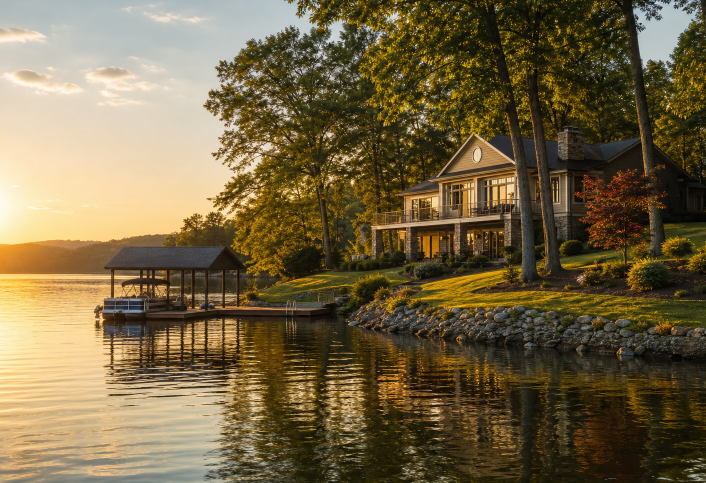
Waterfront homes offer direct access to the water and can offer strong lifestyle appeal for buyers who want easy access to boating, fishing, or relaxing by the shore. However, direct waterfront ownership may also bring higher purchase prices, more specialized maintenance, and additional research before closing.
- Inspect docks, boat lifts, seawalls, retaining walls, drainage, and shoreline conditions.
- Ask about erosion, water-level changes, moisture exposure, and storm-related repairs.
- Confirm whether existing structures were properly permitted and can be maintained or replaced.
- Budget for potentially higher insurance, upkeep, and repair reserves.
Lake-Access Homes
Lake-access homes can provide a middle ground. They may cost less than direct waterfront properties while still allowing residents to enjoy boating and other lake activities. The critical detail is the type of access offered. A property can be close to the lake without having a legal right to use it.
- Access may come from a recorded easement, a shared dock, a neighborhood ramp, an HOA amenity, or a nearby public launch.
- Confirm in writing whether the access right transfers with the property.
- Review annual dues, dock assignments, guest rules, parking limits, and maintenance responsibilities.
- Ask whether shared facilities have waitlists, seasonal restrictions, or limits on boat size.
Inland Homes
Inland homes are often a practical choice for buyers who value convenience, simpler maintenance, larger lots, or a wider selection of neighborhoods and floor plans. Living inland does not mean giving up the lake lifestyle. Many buyers can still enjoy nearby parks, trails, marinas, and public boat ramps without taking on direct shoreline responsibilities.
Review the Full Cost of Ownership
The listing price is only the starting point. Build a realistic ownership budget before making an offer, then compare the same categories across every property under consideration. This can prevent a less expensive home from becoming the costlier choice over time.
- Mortgage payment, property taxes, homeowners’ insurance, and possible flood coverage.
- HOA dues, private-road fees, dock fees, access charges, or special assessments.
- Boat storage, lift upkeep, seawall repairs, shoreline work, and exterior maintenance.
- Well, septic, propane, internet, utility extensions, and fuel costs for a longer commute.
Create three numbers for each home: the expected monthly cost, the likely annual maintenance cost, and a reserve fund for larger repairs. A reserve is particularly important when docks, retaining walls, septic systems, or older structures are involved.
Check Flood Risk and Insurance Early
Review flood exposure before writing an offer, not after inspections are complete. The FEMA Flood Map Service Center is a useful starting point for reviewing mapped flood hazards. However, it does not replace an insurance quote, property-specific elevation review, or professional advice.
- Ask whether the home is in a mapped flood zone and whether a lender may require flood insurance.
- Request homeowners and flood insurance estimates early in the process.
- Review known water damage, prior claims, drainage improvements, and available elevation documentation.
- Consider how the property’s grade, driveway, crawl space, and surrounding terrain handle heavy rain.
Verify Water Access, Docks, and Shoreline Rules
Never rely on a listing description alone for water rights. Review the deed, survey, recorded easements, HOA documents, title work, and permit history. Confirm whether access is private, shared, deeded, public, or simply nearby. Written documentation matters more than a water view from the porch.
For properties near Guntersville Lake, the TVA Guntersville information page offers helpful context on the reservoir and hydroelectric system. Buyers should still ask the appropriate local authorities and qualified professionals about property-specific dock, shoreline, and permit requirements.
Match the Property to Your Maintenance Comfort Level
Be honest about the time, money, and effort you want to spend maintaining a home. Waterfront ownership can involve moisture management, erosion monitoring, dock repairs, drainage work, and more frequent exterior care. Lake-access homes may involve shared-facility rules and assessments. Inland homes generally have fewer shoreline concerns, but buyers should still inspect roofing, trees, drainage, foundations, wells, septic systems, and retaining walls.
Specialized inspections may be worthwhile for docks, seawalls, boat lifts, wells, septic systems, older foundations, and steep lots. The right inspection can reveal costs that a standard home inspection may not fully address.
Study Location, Commute, and Nearby Services
Test the property’s location according to your actual routine. Drive the route to work during normal commute hours. Check travel times to grocery stores, pharmacies, schools, hospitals, marinas, and recreational areas. Ask about road conditions, seasonal traffic, internet availability, and planned development nearby. A quiet rural setting can be rewarding, but a long trip for everyday errands may eventually become frustrating.
Consider Resale Potential Without Overpromising
No property type guarantees appreciation. Still, homes tend to have broader appeal when they offer clear ownership rights, manageable operating costs, usable outdoor space, dependable access, and a location convenient to services or recreation. Compare recent sales with properties that have similar water access, lot features, condition, and location. Square footage alone is not enough to compare a waterfront home with an inland one.
A Simple Decision Checklist
- Define how you will use the home now and in the future.
- Set a complete purchase, ownership, and repair-reserve budget.
- Choose between direct waterfront, shared lake access, or inland convenience.
- Verify legal access rights, boundaries, permits, and shared-maintenance obligations.
- Review flood exposure and obtain insurance estimates.
- Schedule appropriate home and specialty inspections.
- Test the commute and access to essential services.
- Compare similar recent sales before deciding what to offer.
Closing Perspective
The right home setting is about more than scenery. A strong purchase matches your budget, routine, maintenance comfort level, access needs, and long-term plans. By evaluating waterfront, lake-access, and inland homes with the same careful process, buyers can enjoy North Alabama living while reducing the risk of costly surprises after closing.

Gothenburg marine engineer sailing the South Pacific on a hydrogen yacht. Jonas blogs on wave-energy converters, Polynesian navigation, and minimalist coding workflows. He brews seaweed stout for crew morale and maps coral health with DIY drones.